How to Can Food at Home Safely
Summer brings an abundance of fresh fruits and vegetables. Sometimes we have more than we can use immediately. Home canning is a great way to preserve and store fruits, vegetables, and other foods for use later. However, if not done correctly, it may be risky.
Improperly canned food can cause botulism, an extremely serious form of food poisoning that can lead to paralysis and even death. The guidance below will help you can your produce safely.
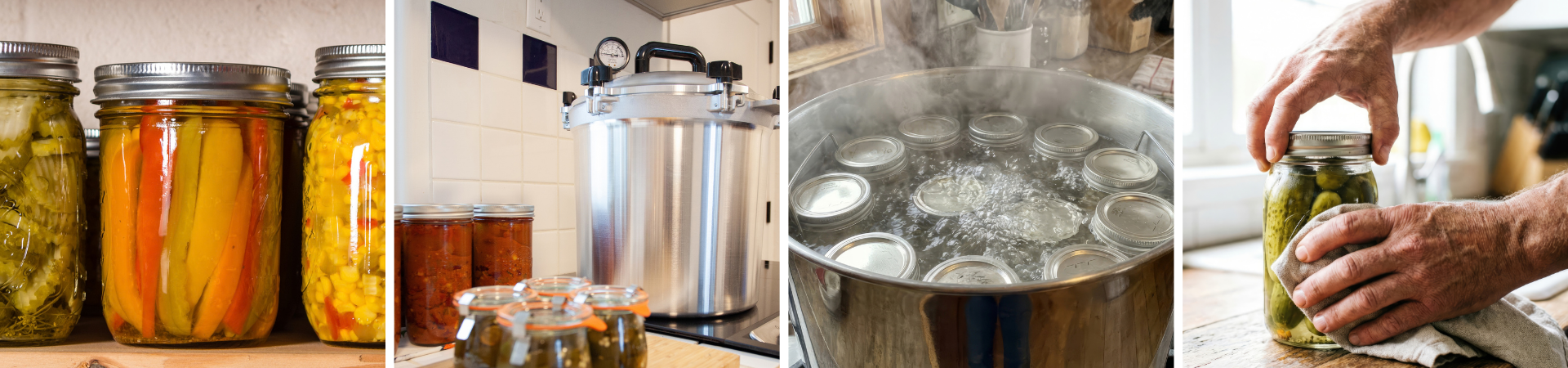
Use a Pressure Canner
- Use a pressure canner made for canning, not a pressure cooker or an Instant Pot
- Be sure your canner is the right size (Canners that are too small can lead to undercooking)
- If your canner has a rubber gasket, make sure it is flexible and soft – not brittle, sticky, or cracked
- Clean and remove any debris from the openings of small pipes or vents
- Vent the air from your canner for 10 minutes before you pressurize the canner
Avoid using boiling water canners, especially for low-acid foods or tomatoes, because they will not protect you against botulism poisoning.
Follow Up-To-Date Canning Instructions
- Canning instructions and equipment have changed over the years.
- Make sure you are using modern, scientifically tested canning instructions.
- Avoid canning instructions in outdated cookbooks or handed down from previous generations.
- If you have any questions, consult the USDA Complete Guide to Home Canning or the other resources listed below.
When in Doubt, Throw It Out!
If you have any doubt about the safety of a home-canned food, do not eat it. Never taste home-canned foods to determine if they are safe. One usually can’t taste or smell the bacteria that cause foodborne illnesses.
Inspect Canned Foods When You Open Them
Discard containers of food that:
- Look damaged, cracked, or abnormal
- Are leaking, bulging, or swollen
- Spurt liquid or foam when opened
- Are discolored, moldy, or smell bad
Seek Medical Attention
Seek immediate medical attention if you experience blurred or double vision, slurred speech, difficulty swallowing, dry mouth, drooping eyelids, or muscle weakness after eating home-canned food. These are the symptoms of botulism, a serious and sometimes fatal form of food poisoning.
More Resources
USDA Complete Guide to Home Canning
National Center for Home Food Preservation
The above information is courtesy of the Centers for Disease Prevention and Control, the U.S. Food and Drug Administration, the U.S. Department of Agriculture, and the Cooperative Extension Service. Content published in partnership with the West Virginia Retail Food Safety Collaborative.