
Slow Cookers and Food Safety
No matter the season, a slow cooker can make mealtime more convenient by helping you prepare ahead and save time later. Coming home to the comforting aroma of beef stew or chicken noodle soup simmering in the slow cooker can make dinner feel effortless and inviting.
During the summer months, this small appliance is especially helpful because it keeps the kitchen cooler than using a traditional oven and uses less electricity as well.
Is a Slow Cooker Safe?
Yes, the slow cooker, a countertop electrical appliance, cooks food slowly at a low temperature—generally between 170° and 280° F. The low heat helps make less expensive, leaner cuts of meat become tender and shrink less.
The direct heat from the pot, lengthy cooking and steam created within the tightly-covered container combine to destroy bacteria and make the slow cooker a safe process for cooking foods.
Safe Beginnings
Begin with a clean cooker, clean utensils and a clean work area. Wash hands before and during food preparation.
Keep perishable foods refrigerated until preparation time. If you cut up meat and vegetables in advance, store them separately in the refrigerator. The slow cooker may take several hours to reach a safe, bacteria-killing temperature. Constant refrigeration assures that bacteria, which multiply rapidly at room temperature, won’t get a “head start” during the first few hours of cooking.
Thaw Ingredients
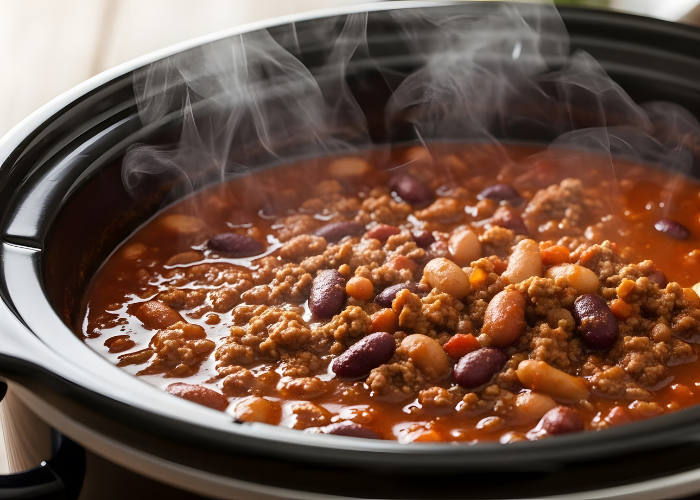
Always thaw meat or poultry before putting it into a slow cooker. Choose to make foods with a high moisture content, such as chili, soup, stew or spaghetti sauce. If using a commercially frozen slow cooker meal, prepare according to the manufacturer’s instructions.
Use the Right Amount of Food
Vegetables cook more slowly than meat and poultry in a slow cooker, so if using them, put the vegetables in first.
Cooking Reminders
- Always thaw meat or poultry before putting it into a slow cooker.
- Make sure the cooker is plugged in and turned on.
- Keep the lid in place.
Large cuts of meat and poultry can be cooked safely in a slow cooker. Because slow cookers come in a variety of sizes, be sure to consult your instruction manual for recommended meat and poultry sizes. Add the meat along with the amount of liquid called for in the recipe, such as broth, water or barbecue sauce. Keep the lid in place during cooking, removing it only to stir the food or check for doneness.
Settings
Most slow cookers have two or more heat settings, and cooking times will vary depending on which setting is used. Foods cook faster on high, while the low setting is ideal for all-day cooking and less-tender cuts of meat.
If possible, start cooking on the high setting for the first hour, then switch to low or the setting recommended in your recipe. It is also safe to cook food on low for the entire cooking time — especially if you’ll be away from home during the day.
Food remains safe while cooking and after it is done, as long as the slow cooker remains on.
Power Outage
If you are not at home during the entire slow-cooking process and the power goes out, throw away the food even if it looks done. If you are at home, finish cooking the ingredients immediately by some other means, such as on a gas stove, on an outdoor grill, or at a house where the power is on. When you are at home, and if the food was completely cooked before the power went out, the food should remain safe up to two hours in the cooker with the power off.
Handling Leftovers
Store leftovers in shallow, covered containers and refrigerate them within two hours after cooking. Reheating leftovers in a slow cooker is not recommended.
Instead, reheat cooked food on the stovetop, in a microwave or in a conventional oven until it reaches an internal temperature of 165°F. Once reheated, food may be transferred to a preheated slow cooker to keep it warm for serving at 140°F or higher, as measured with a food thermometer.